

Key Takeaways
- Digestion begins in the mouth, where chewing and saliva start breaking down food chemically and physically.
- The stomach uses acid and enzymes to liquefy food into a substance called chyme before passing it along.
- Most nutrient absorption happens in the small intestine, aided by the liver, pancreas, and bile.
- The large intestine reclaims water, hosts trillions of gut bacteria, and forms solid waste.
- A healthy digestive system depends on factors including diet, hydration, stress levels, and sleep.
Start here
The Mouth and Esophagus: Where Digestion Begins
Next
The Stomach: Breaking Food Down Further
Then
The Small Intestine: Where Most Nutrients Are Absorbed
Going deeper
The Large Intestine: Water, Waste, and Your Microbiome
Put it together
Why Understanding Digestion Matters for Everyday Wellness
The Mouth and Esophagus: Where Digestion Begins
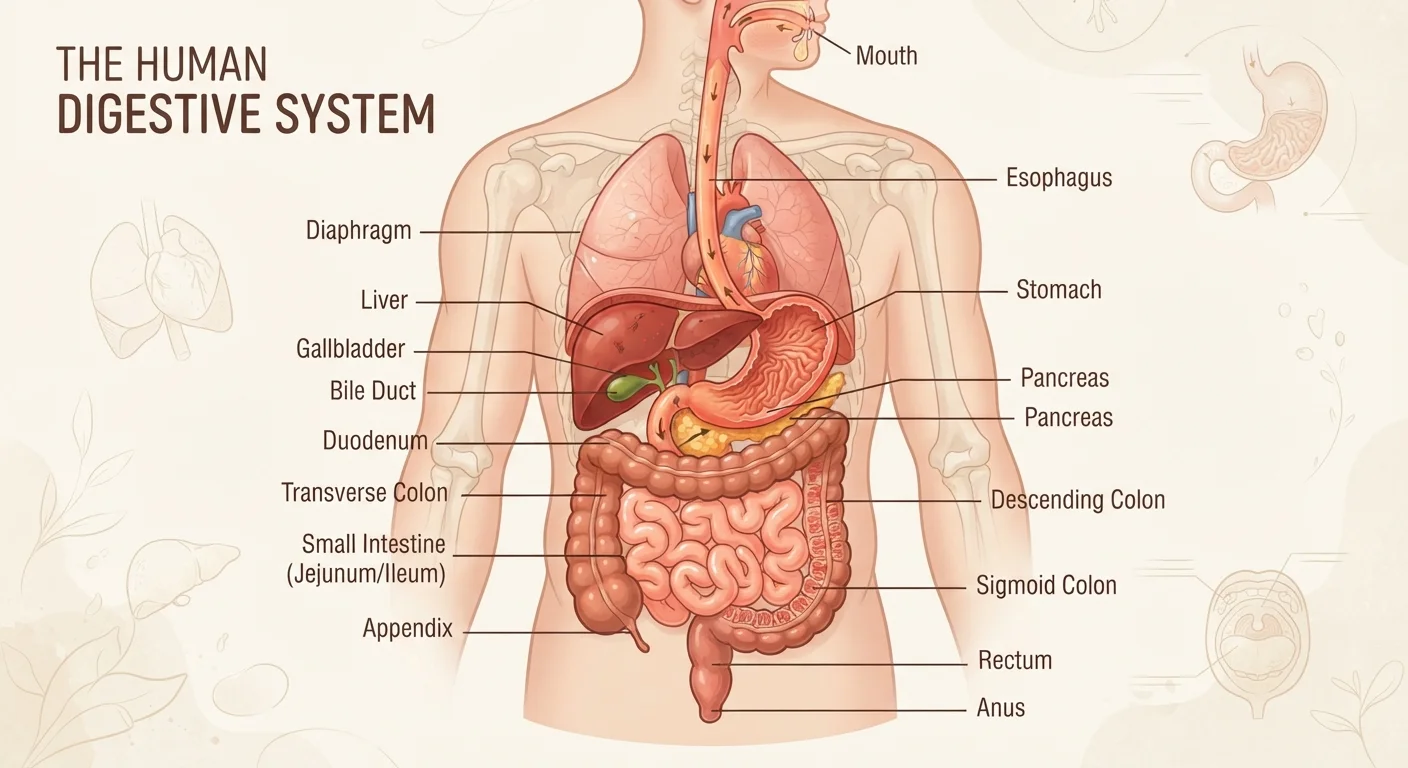
Digestion starts the moment food enters your mouth — well before you swallow. Chewing (the technical term is mastication) breaks food into smaller pieces, increasing the surface area available for chemical breakdown. Simultaneously, your salivary glands release saliva containing amylase, an enzyme that begins converting starch into simpler sugars.
Once swallowed, a muscular tube called the esophagus carries food to the stomach through rhythmic wave-like contractions known as peristalsis. A ring of muscle at the base of the esophagus — the lower esophageal sphincter — opens to allow food through and then closes to prevent stomach acid from flowing back up.
Peristalsis
Coordinated wave-like muscular contractions that move food and waste through the digestive tract automatically, without conscious control.
Chyme
The semi-liquid mixture of partially digested food and stomach secretions that passes from the stomach into the small intestine.
Villi
Tiny finger-like projections lining the small intestine that dramatically increase the surface area available to absorb nutrients into the bloodstream.
Bile
A digestive fluid produced by the liver and stored in the gallbladder that breaks dietary fats into smaller droplets so enzymes can digest them.
Short-chain fatty acids (SCFAs)
Compounds produced when gut bacteria ferment dietary fiber; they nourish colon cells and play roles in immune regulation and inflammation control.
Gut microbiome
The vast community of bacteria, fungi, and other microorganisms living in your digestive tract, particularly in the large intestine, that influence digestion and overall health.
The Stomach: Breaking Food Down Further
The stomach is a muscular, J-shaped organ that acts as a holding chamber and processing facility. Its walls secrete hydrochloric acid and pepsin, an enzyme that begins protein breakdown. The acid environment also destroys many pathogens that arrive with food.
Powerful stomach contractions churn food with these secretions, gradually converting the mixture into a semi-liquid substance called chyme. This process takes roughly two to five hours depending on meal composition — fat-rich meals empty more slowly than carbohydrate-heavy ones. When chyme is ready, it passes through the pyloric sphincter into the small intestine in carefully regulated batches.
Chewing More Eases the Stomach's Work
Thoroughly chewing food reduces the mechanical burden on the stomach and can improve early-stage chemical breakdown. Aiming for smaller, well-chewed bites — rather than rushing through meals — gives salivary enzymes more time to act and may reduce post-meal discomfort for some people.
The Small Intestine: Where Most Nutrients Are Absorbed
Despite its name, the small intestine is the longest segment of the digestive tract — about 20 feet in most adults. This is where the majority of nutrient absorption takes place. Three organs support this process: the pancreas releases enzymes that digest carbohydrates, proteins, and fats; the liver produces bile; and the gallbladder stores and concentrates that bile, releasing it to emulsify dietary fats so they can be absorbed.
The inner lining of the small intestine is covered in microscopic finger-like projections called villi, and each villus is covered in even smaller projections called microvilli. Together they create an enormous surface area — estimated at roughly the size of a studio apartment — that allows glucose, amino acids, fatty acids, vitamins, and minerals to pass efficiently into the bloodstream and lymphatic system.
To learn how gut bacteria interact with these absorbed nutrients and immune signals, see our guide to the gut microbiome.
The Large Intestine: Water, Waste, and Your Microbiome
Whatever the small intestine cannot absorb passes into the large intestine (also called the colon), a roughly five-foot-long tube whose primary jobs are water reclamation and waste consolidation. As material moves through, the colon walls absorb water and electrolytes, transforming liquid chyme into formed stool.
The large intestine is also home to the densest concentration of your gut microbiome — the trillions of bacteria, fungi, and other microorganisms that live in your digestive tract. These microbes ferment dietary fiber that your own enzymes cannot digest, producing short-chain fatty acids (SCFAs) like butyrate. SCFAs nourish colon cells, help regulate the immune system, and may influence inflammation throughout the body.
Stool collects in the rectum and is eventually eliminated through the anus, completing the digestive journey. Transit time through the large intestine varies considerably — from 10 hours to several days — and is influenced by hydration, fiber intake, physical activity, and stress.
For a broader look at how lifestyle choices shape those microbial communities, our explainer on everyday habits and your microbiome covers what the evidence currently supports.
Why Understanding Digestion Matters for Everyday Wellness
Digestion is not just about processing meals — it sits at the intersection of immunity, energy, mood, and long-term health. Roughly 70 percent of the body's immune cells are located in or near the gut lining, meaning a well-functioning digestive system is foundational to immune defense. Disruptions at any stage — insufficient stomach acid, poor enzyme output, or an imbalanced microbiome — can cascade into broader symptoms.
Practical habits that support digestive function include chewing food thoroughly, staying well hydrated, eating adequate dietary fiber, managing chronic stress, and maintaining consistent sleep. None of these are dramatic interventions; they work by supporting the system's existing architecture rather than overriding it.
If you encounter health claims on food labels or supplements promising digestive benefits, our field guide to gut health label terms can help you evaluate them critically. And for a comprehensive look at how all these elements connect — from the microbiome to gut-immune signaling — the complete gut health overview is a natural next step.
This article is for general informational and educational purposes only and does not constitute medical advice. If you have concerns about your digestive health, please consult a qualified healthcare professional.