

Key Takeaways
- Intestinal permeability is a measurable, real biological phenomenon studied in clinical research.
- 'Leaky gut' as a stand-alone diagnosis for a wide range of symptoms is not recognized by mainstream medicine.
- Increased gut permeability is associated with certain conditions but is rarely a confirmed root cause.
- Many online 'leaky gut' cures lack robust clinical evidence and should be approached with skepticism.
- Diet, stress, and medications can affect intestinal barrier function in documented ways.
The Biology Behind the Buzzword
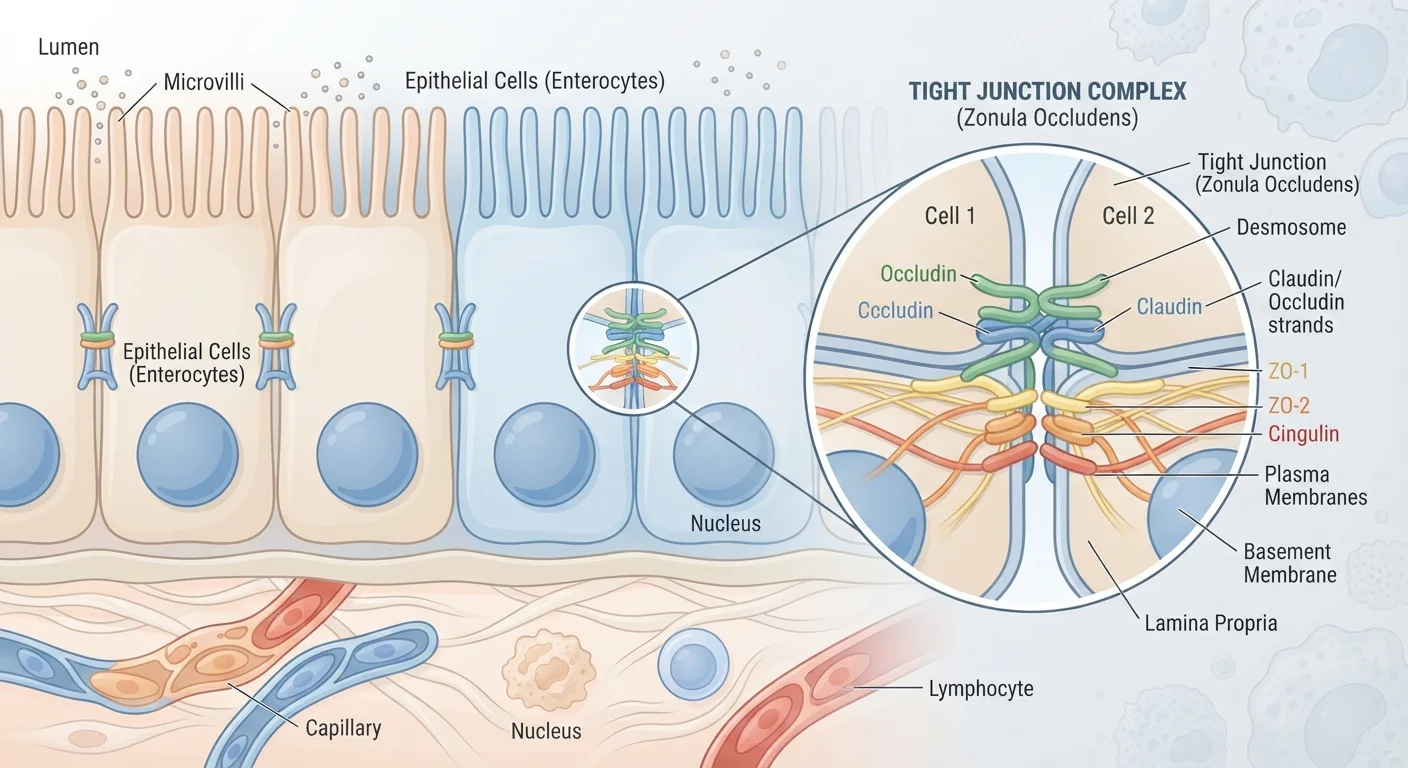
Your intestinal lining is a single-cell-thick barrier that separates digested food from your bloodstream. Specialized proteins called tight junctions link neighboring epithelial cells, controlling precisely which molecules pass through. This selective permeability is essential — nutrients must cross into the blood while bacteria, undigested particles, and toxins should largely stay out.
When tight junctions loosen or become disrupted, larger molecules can cross more freely. Researchers call this increased intestinal permeability — the biological reality behind the popular term "leaky gut." It is measurable using established tests such as the lactulose-mannitol ratio, and it appears in peer-reviewed literature in the context of conditions like Crohn's disease, celiac disease, and critical illness.
Understanding this mechanism is important because it is real, nuanced, and frequently misrepresented online. For a broader look at how gut structure interacts with immune defenses, see what gut-based immunity actually means.
Myths vs. Facts: Setting the Record Straight
The gap between established science and popular wellness culture is nowhere wider than in discussions of leaky gut. The following myth-and-fact pairs address the most common and consequential misconceptions circulating today.
Myth
"Leaky gut" is a recognized medical diagnosis that explains a wide range of symptoms, from fatigue to autoimmune disease.
Fact
Increased intestinal permeability is a documented physiological state, but "leaky gut syndrome" as a broad clinical diagnosis is not accepted by mainstream gastroenterology.
Major professional bodies, including gastroenterological societies, do not recognize "leaky gut syndrome" as a defined diagnosis. Increased permeability is observed in specific, well-characterized conditions. Attributing a long list of unrelated symptoms — brain fog, joint pain, skin problems — to leaky gut as a single root cause goes well beyond what current evidence supports. This framing is popular in wellness culture but should not be confused with established medical science.
Myth
If your gut is leaky, harmful substances are freely flooding into your bloodstream and making you sick.
Fact
The intestinal barrier is dynamic and self-regulating; transient changes in permeability are normal and do not automatically mean systemic harm.
Permeability exists on a spectrum. Even a healthy gut allows some molecules through — that is part of normal immune sampling. The liver and immune system provide additional layers of defense. Clinically significant permeability that contributes to disease is a different matter from the modest fluctuations that occur daily in response to meals or exercise. Framing the gut as a broken floodgate misrepresents a sophisticated, layered system. See how intestinal permeability and immunity actually relate for a more detailed breakdown.
Myth
Specialized diets and supplements marketed for leaky gut are proven treatments backed by strong clinical evidence.
Fact
Most commercial "leaky gut" protocols lack rigorous clinical trial support; some ingredients show early promise in research but none are proven treatments.
Ingredients like L-glutamine and zinc have appeared in preliminary studies examining gut barrier function, and dietary fiber supporting beneficial bacteria is well-supported for overall gut health. However, there are no supplement protocols with strong, replicated, human clinical trial evidence specifically targeting increased intestinal permeability as a disease. Products marketed as leaky gut cures frequently rely on mechanistic plausibility and anecdote rather than controlled evidence. Skepticism is warranted, and spending decisions should not be driven by unverified health claims.
Myth
Only people with obvious digestive problems need to worry about intestinal permeability.
Fact
Research suggests permeability can be influenced by lifestyle factors — such as chronic stress, poor sleep, and alcohol — even without obvious gut symptoms.
Studies have documented that psychological stress, NSAID use, and alcohol consumption can measurably alter tight junction function. These effects can occur without prominent gastrointestinal complaints. This is relevant because it connects everyday lifestyle choices to gut biology — not to suggest that everyone has a dangerous condition, but to highlight that the intestinal barrier is responsive to the same factors that affect overall health. Supporting general wellbeing through established habits remains the most evidence-consistent approach.
Myth
Leaky gut causes autoimmune diseases, and fixing it will reverse them.
Fact
The relationship between intestinal permeability and autoimmune conditions is under active research, but a causal, reversible link has not been established in humans.
Some research does show that people with certain autoimmune conditions, such as type 1 diabetes and rheumatoid arthritis, can have elevated intestinal permeability. However, it is unclear whether permeability is a cause, a consequence, or a parallel feature of these conditions. No clinical evidence demonstrates that interventions targeting permeability reverse established autoimmune disease. This is an active and genuinely interesting research area, but it is not settled science. The gut-immune myths that keep getting repeated article explores related misconceptions in more detail.
For a deeper look at how gut bacteria and inflammation interact — a topic closely tied to permeability research — visit our explainer on gut bacteria, inflammation, and immunity.
What the Evidence Actually Supports
Research does establish that disrupted gut barrier function appears alongside — and may contribute to — certain gastrointestinal and systemic diseases. Studies in people with inflammatory bowel disease and celiac disease consistently document elevated permeability. Animal models show that inducing permeability can trigger immune responses. But correlation observed in disease states does not confirm that permeability causes common, vague symptoms in otherwise healthy people.
~20%
IBD patients with measurably elevated permeability
Studies of inflammatory bowel disease populations consistently find elevated intestinal permeability, though estimates vary by disease type, activity, and measurement method.
1 cell thick
Thickness of the intestinal epithelial barrier
The entire gut lining is a single layer of epithelial cells — an architectural fact that underscores how tightly regulated tight junction proteins must be.
Several factors are documented to influence intestinal barrier integrity: a diet low in dietary fiber, chronic psychological stress, heavy alcohol consumption, and long-term use of nonsteroidal anti-inflammatory drugs (NSAIDs) have each been linked to measurable changes in permeability. This does not mean these exposures always cause clinical problems, but it does provide practical, evidence-grounded reasons to support overall gut health through well-established habits. For guidance on those habits, see what everyday habits actually influence your microbiome.
If you are experiencing persistent gastrointestinal symptoms, a qualified healthcare provider can evaluate whether measurable permeability changes are relevant to your situation and recommend appropriate next steps. This article is general health information and is not a substitute for personalized medical advice.
This article is for informational and educational purposes only and does not constitute medical advice. Always consult a qualified healthcare professional for concerns about your digestive health or any symptoms you may be experiencing.