

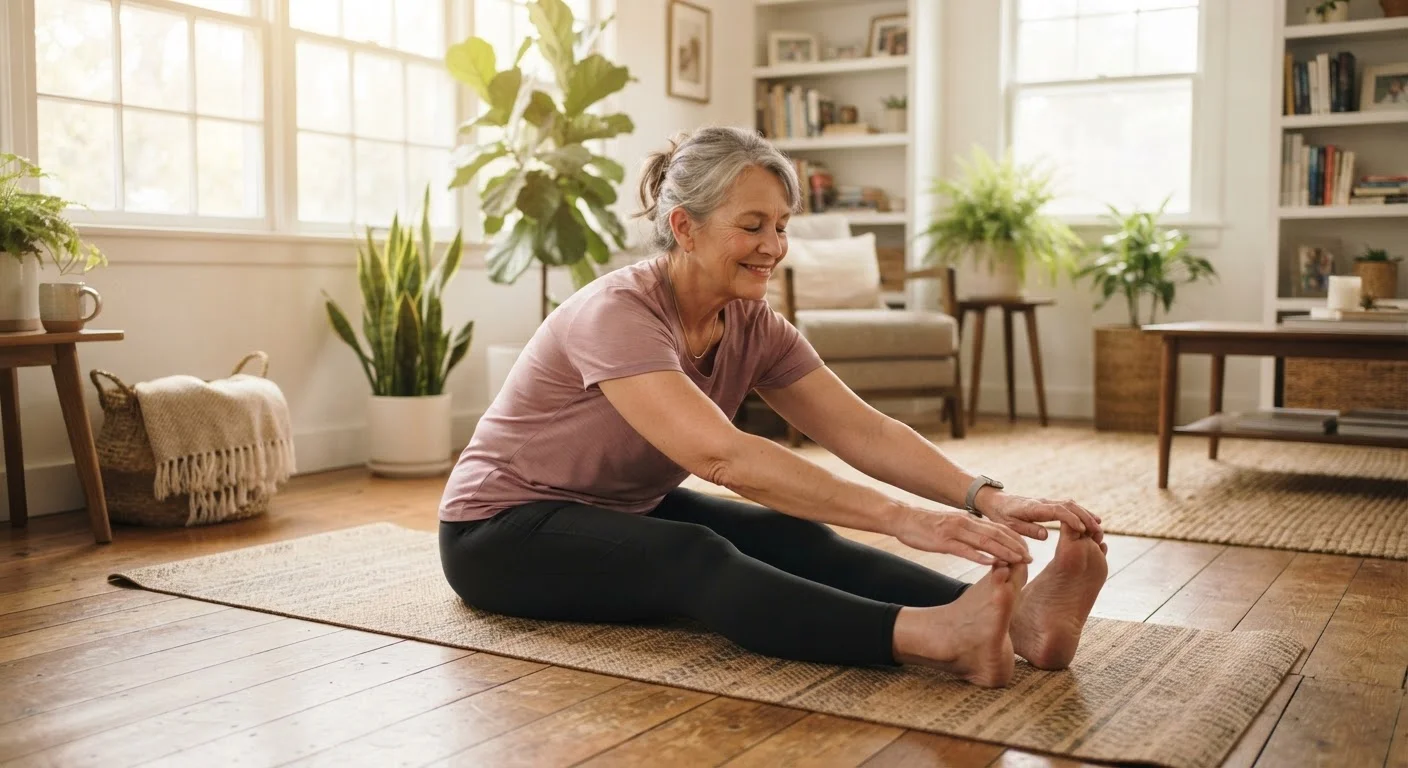
Key Takeaways
- Flexibility and mobility are related but different — both deserve attention in an aging fitness routine.
- Loss of range of motion accelerates after age 50 but is largely preventable with regular practice.
- Improved mobility reduces fall risk, eases joint discomfort, and supports independence in daily tasks.
- Static stretching and dynamic movement drills serve different purposes and work best together.
- Even brief daily sessions — as short as 10 minutes — can produce meaningful, lasting improvements.
- Always consult a healthcare professional before starting a new exercise program, especially with existing joint conditions.
Flexibility vs. Mobility
Flexibility refers to the ability of muscles and connective tissue to lengthen and stretch. Mobility is a broader concept — it describes the ability of a joint to move actively through its full intended range of motion. While related, they are distinct: you can be flexible without having good mobility, and vice versa. Both decline gradually with age but respond well to consistent, targeted practice.
Clinically, mobility encompasses not just passive tissue extensibility but also neuromuscular control, joint stability, and coordination — making it a more functionally relevant target for fall prevention and everyday movement quality.
Why Flexibility and Mobility Decline With Age
Starting around the fifth decade of life, the body undergoes measurable changes in connective tissue composition. Collagen fibers in tendons and ligaments become stiffer and less elastic. Cartilage thins. Muscle fibers lose some of their capacity to lengthen fully. The result is a gradual tightening that many older adults notice first in the hips, shoulders, and lower back.
Sedentary behavior accelerates this process considerably. When joints aren't moved through their full range regularly, the surrounding tissue adapts to a shorter length — a phenomenon sometimes called adaptive shortening. This isn't an irreversible biological sentence; it's a use-it-or-lose-it dynamic. The encouraging reality is that connective tissue retains substantial adaptability well into later life when given consistent stimulus.
~30%
Decline in muscle flexibility by age 70
Research in exercise physiology estimates that adults lose roughly 20–30% of their flexibility between ages 30 and 70, with the rate accelerating after age 50.
1 in 4
Adults 65+ who fall each year
The CDC reports that approximately one in four Americans aged 65 and older experiences a fall annually, with limited mobility identified as a key contributing factor.
2x/week
Minimum recommended flexibility training frequency
The U.S. Department of Health and Human Services Physical Activity Guidelines recommend flexibility exercises at least two days per week for older adults.
Understanding this distinction matters for how you train. Stretching a muscle addresses flexibility. Moving a joint through its active range — under load or control — builds mobility. Both are necessary, and neither fully substitutes for the other.
Why Both Matter for Functional Independence
The practical stakes of declining flexibility and mobility are significant. Difficulty reaching overhead, getting up from a low chair, turning to check traffic while driving, or stepping over an obstacle without stumbling — these are mobility-dependent tasks. When range of motion narrows, the body compensates with altered movement patterns that place uneven stress on joints and increase injury risk.
Fall prevention is perhaps the most clinically important benefit. Research in exercise science consistently identifies hip and ankle mobility, along with dynamic balance, as modifiable risk factors for falls in older adults. Improving these through targeted practice translates directly into safer, more confident movement. For a broader look at how movement fits into healthy aging across decades, see the complete guide to active aging.
“Mobility is the foundation of functional independence. When we preserve range of motion across key joints, we preserve the capacity to live on our own terms.”
— American College of Sports Medicine, Leading professional organization for exercise science and sports medicine
Flexibility work also supports recovery from other forms of exercise. Tight hip flexors after cycling or walking, for instance, contribute to lower back strain over time. Incorporating stretching as part of a complete routine — not as an afterthought — helps maintain structural balance across muscle groups.
Types of Practice: Matching the Tool to the Goal
Static stretching — holding a position for 20 to 60 seconds — is the most familiar form of flexibility work. It's most effective when muscles are already warm, making it better suited to post-exercise cool-downs than cold pre-workout warm-ups. Targets include the hamstrings, hip flexors, chest, and calves, all of which tend to tighten with age and prolonged sitting.
Dynamic mobility drills involve controlled, intentional movement through a joint's range — leg swings, hip circles, thoracic rotations, and ankle circles are common examples. These are more appropriate as warm-up activity and build the neuromuscular coordination that supports safe movement patterns during exercise and daily life.
Yoga and tai chi combine flexibility, mobility, balance, and breath — making them particularly well-rounded for older adults. If conventional floor yoga feels inaccessible, chair yoga offers a meaningful alternative that lowers the physical barrier to entry without sacrificing core benefits.
These practices pair naturally with low-impact cardio. See how walking, swimming, and cycling compare as complementary movement options for aging bodies.
Building a Sustainable Practice
Consistency is the single most important variable. A 10-minute daily mobility routine produces better long-term outcomes than an occasional hour-long session. The goal is to weave flexibility and mobility work into existing habits — morning routines, post-walk cool-downs, or evening wind-downs — rather than treating them as separate, effortful commitments.
Progression matters too. Beginning with gentle range-of-motion movements and gradually increasing depth over weeks respects tissue adaptation timelines and reduces injury risk. Discomfort during stretching should feel like mild tension, never sharp or joint-centered pain. If pain is present, pause and seek professional evaluation.
For those whose routines are frequently disrupted by travel or schedule changes, strategies for keeping movement consistent can help anchor the practice through change. And if motivation to exercise feels fragile, understanding why older adults commonly quit exercise routines is a useful starting point for building more resilient habits.
This article is for general informational purposes only and does not constitute medical advice. Consult a qualified healthcare professional before beginning any new exercise program, particularly if you have existing joint conditions, balance concerns, or chronic health issues.