

Key Takeaways
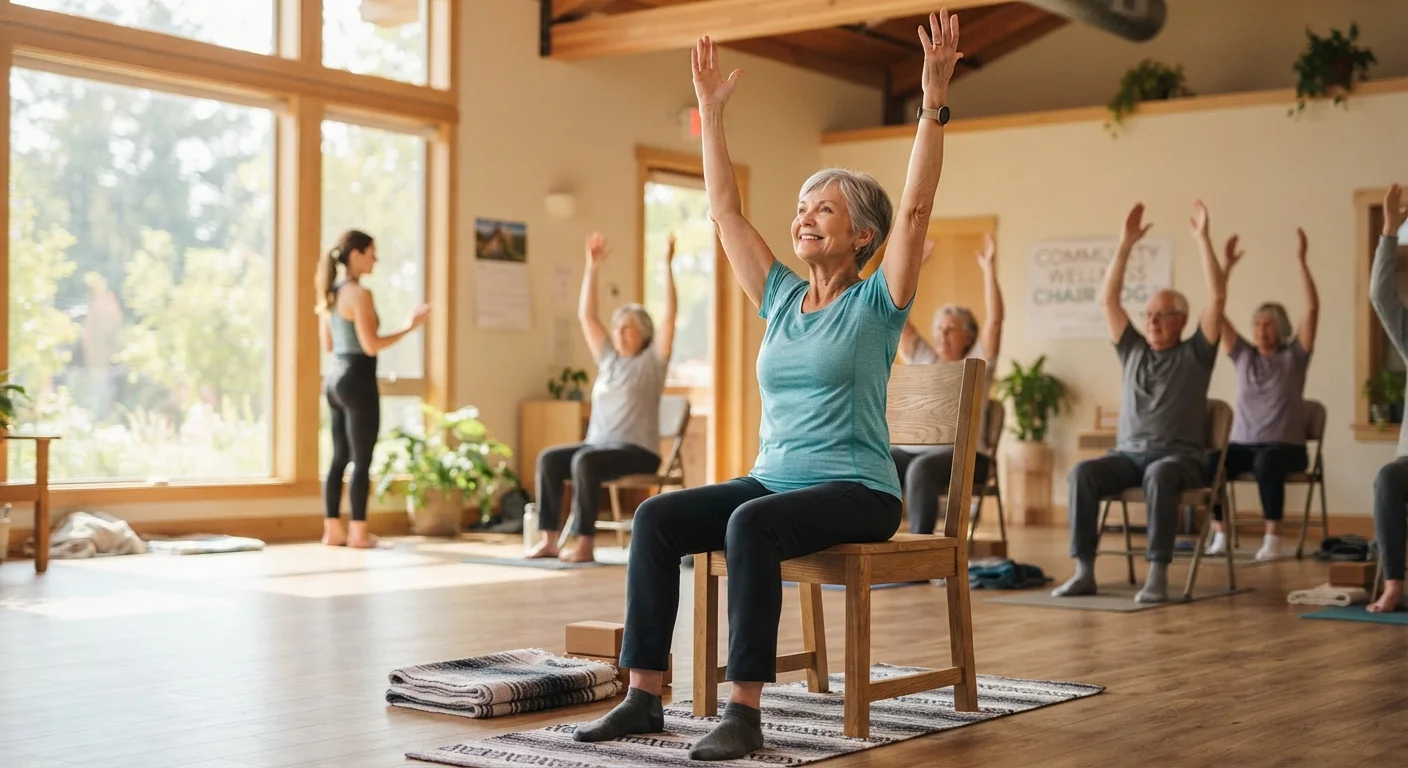
- Chair yoga adapts standard poses using a chair for support, making practice safe for those with limited mobility or balance challenges.
- Traditional yoga offers a broader range of poses and intensity levels but requires more baseline strength, balance, and joint health.
- Both forms deliver meaningful benefits for flexibility, stress reduction, and mental well-being in older adults.
- Neither practice requires prior yoga experience, but both benefit from qualified, age-aware instruction.
- Always consult a healthcare provider before beginning any new exercise routine, especially with existing health conditions.
Option A
Chair Yoga
The accessible, adaptive approach for all mobility levels.
Best for: Older adults managing joint pain, limited mobility, balance concerns, or returning to exercise after a long break.
Option B
Traditional Yoga
The comprehensive, time-tested flexibility practice.
Best for: Active older adults with reasonable baseline mobility who want a fuller range of poses, breathwork, and mindfulness integration.
If you have joint pain, balance issues, or limited mobility
Chair Yoga
The chair provides continuous support, dramatically reducing fall risk and joint strain while still delivering meaningful flexibility and relaxation benefits.
If you are an active older adult with good baseline mobility
Traditional Yoga
Traditional yoga's wider range of standing and floor poses more fully challenges balance, strength, and flexibility, supporting greater long-term functional fitness.
If you are returning to exercise after injury or a long break
Chair Yoga
Starting seated lowers barriers significantly, builds confidence, and can serve as a bridge back to more demanding physical activity over time.
If you want to practice independently at home with minimal equipment
Chair Yoga
All you need is a stable chair, making it one of the most logistically simple practices available for older adults.
If social engagement and community are important to your routine
Traditional Yoga
Traditional yoga classes are widely available at gyms, studios, and community centers, offering robust opportunities for group participation and social connection.
Understanding the Core Differences
Both chair yoga and traditional yoga are rooted in the same foundational principles: coordinated breathwork, mindful movement, and progressive stretching. The essential difference lies in how poses are modified and what physical demands they place on the body.
In traditional yoga, practitioners move between standing, seated-on-floor, and reclined positions. Even gentle or restorative classes require a degree of balance, hip flexibility, and the ability to safely lower to and rise from a floor mat — all of which become genuinely challenging for many older adults.
Chair yoga reimagines these same movements with a sturdy chair as the central prop. Poses are performed while seated or while standing with hands resting on the chair back for support. This single adaptation removes many of the physical prerequisites that can make traditional yoga inaccessible, without eliminating the core benefits of the practice.
For a broader look at how flexibility work fits into a healthy aging plan, see our guide on flexibility and mobility in healthy aging.
| Criterion | Chair Yoga | Traditional Yoga |
|---|---|---|
| Mobility requirement | Low — seated or supported throughout | Moderate — floor transitions required |
| Fall risk | Very low — chair provides constant support | Low to moderate — balance poses increase risk |
| Balance training | Limited in seated poses | Stronger stimulus via standing poses |
| Flexibility benefits | Good — targets major muscle groups | Good to excellent — wider pose range |
| Stress reduction | Yes — breathwork equally effective | Yes — breathwork equally effective |
| Equipment needed | Stable chair only | Yoga mat; optional blocks and straps |
| Accessibility for beginners | Very high | Moderate — class level matters |
| Class availability | Growing; senior centers, online | Widely available at studios and gyms |
Benefits: What the Research Suggests
Research on yoga for older adults — across both formats — points to consistent benefits in several areas. Studies have associated regular yoga practice with improvements in balance, functional flexibility, and self-reported quality of life in adults over 60. Chair yoga specifically has been studied in populations with osteoarthritis, dementia, and chronic pain, with findings suggesting reductions in discomfort and improvements in mood.
Traditional yoga, when appropriate for the individual, may offer a wider training stimulus. Standing balance poses, for example, engage stabilizing muscles in ways that seated practice does not replicate as fully. This matters because fall prevention is one of the most clinically significant fitness goals for older adults.
~34%
Reduction in fall risk with balance training
A review published in the British Journal of Sports Medicine found that exercise programs targeting balance and functional mobility reduced fall rates in older adults by approximately one-third.
60+
Age group showing yoga benefits in trials
Multiple randomized controlled trials have enrolled adults aged 60 and older and documented improvements in flexibility, balance, and psychological well-being following regular yoga participation.
2–3x/week
Recommended frequency for flexibility gains
The American College of Sports Medicine recommends flexibility exercises at least two to three days per week for older adults to maintain and improve range of motion.
Both practices support stress reduction through the activation of the parasympathetic nervous system — the body's rest-and-digest response — via slow, intentional breathing. This benefit transfers regardless of whether you are seated in a chair or on a mat.
Chair yoga and traditional yoga also fit within the broader category of low-impact movement. If you are exploring other options in this space, low-impact activities that deliver real fitness gains covers complementary choices worth considering.
Choosing the Right Fit — and When to Transition
The most important factor in choosing between chair yoga and traditional yoga is honest self-assessment of your current physical capacity — ideally with input from a healthcare provider or physical therapist. Neither practice is universally superior; the right choice is the one you can perform safely and sustain consistently.
Chair yoga is an excellent starting point, not a lesser option. Many practitioners use it as a long-term practice, while others find that it builds enough strength and confidence to gradually transition to mat-based traditional yoga. That progression is entirely personal and should not be rushed.
Instructor quality matters significantly in both formats. Look for teachers with specific training in adaptive or senior yoga, and do not hesitate to ask about their experience with older adult populations or specific health conditions. Group formats can also add meaningful social connection to the physical benefits — a topic worth exploring in group fitness versus solo exercise for older adults.
For older adults building a complete movement routine, yoga of either kind pairs well with cardiovascular activity. Walking, swimming, or cycling each offer distinct cardio benefits that complement the flexibility and balance work yoga provides.
This article is for general informational purposes only and does not constitute medical advice. Consult a qualified healthcare professional before beginning any new exercise program, particularly if you have existing health conditions, recent injuries, or mobility limitations.