

| Most-studied dietary pattern for brain health | MIND Diet (Morris et al., Alzheimer's & Dementia, 2015) |
| Key omega-3 in brain cell membranes | DHA (docosahexaenoic acid) (National Institutes of Health, Office of Dietary Supplements) |
| Primary study type in diet-brain research | Observational / longitudinal cohort (Limitation acknowledged broadly in nutrition science literature) |
| Leafy greens servings associated with slower decline | ~1 serving per day (Rush Memory and Aging Project findings) |
| Supplement vs. whole food evidence | Whole foods better supported (Consistent finding across omega-3 and antioxidant RCTs) |
What the Research Actually Shows
Headlines promising that a single food will "boost brain power" consistently outpace what the science actually demonstrates. The honest picture is more nuanced — and still useful. A growing body of epidemiological and clinical research suggests that certain foods and dietary patterns are associated with slower cognitive decline and better long-term brain function. Association, however, is not causation, and most findings come from observational studies that cannot fully isolate diet from other lifestyle factors.
The strongest signal in the literature isn't about individual superfoods — it's about overall dietary patterns. The MIND diet (Mediterranean-DASH Intervention for Neurodegenerative Delay), which combines elements of Mediterranean and DASH eating, has been among the most studied frameworks for cognitive health specifically. Research published in peer-reviewed journals has associated adherence to this pattern with a meaningfully slower rate of cognitive decline in older adults, though effect sizes and replication vary across studies.
For a grounding in the terminology that comes up in this research, see our plain-language cognitive health glossary.
| Most-studied dietary pattern for brain health | MIND Diet (Morris et al., Alzheimer's & Dementia, 2015) |
| Key omega-3 in brain cell membranes | DHA (docosahexaenoic acid) (National Institutes of Health, Office of Dietary Supplements) |
| Primary study type in diet-brain research | Observational / longitudinal cohort (Limitation acknowledged broadly in nutrition science literature) |
| Leafy greens servings associated with slower decline | ~1 serving per day (Rush Memory and Aging Project findings) |
| Supplement vs. whole food evidence | Whole foods better supported (Consistent finding across omega-3 and antioxidant RCTs) |
Foods That Appear Repeatedly in Brain Health Research
Several food categories show up consistently across well-designed studies. Here is what the evidence supports — and where it falls short.
Leafy Green Vegetables
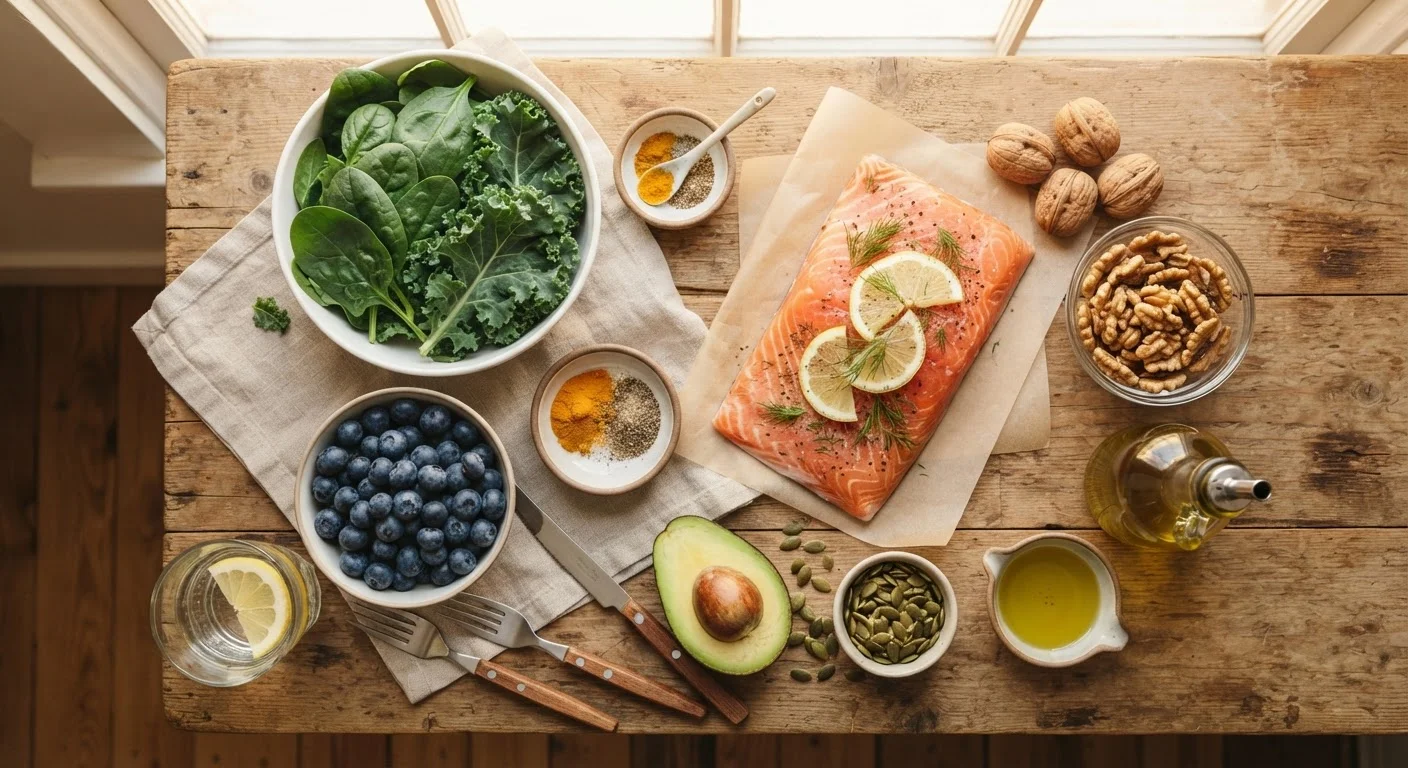
Spinach, kale, collards, and similar greens are among the most robustly associated foods with cognitive benefit. They are rich in folate, vitamin K, lutein, and beta-carotene. Observational data, including from the Rush Memory and Aging Project, have linked higher leafy green intake with slower cognitive aging — roughly equivalent to being about 11 years younger cognitively among the highest consumers compared to the lowest. That comparison is striking, but it is drawn from self-reported dietary data and cannot establish cause.
Fatty Fish
Salmon, mackerel, sardines, and herring supply omega-3 fatty acids — particularly DHA (docosahexaenoic acid) — which is a structural component of brain cell membranes. Observational research broadly links higher fish intake with lower dementia risk, though randomized controlled trials of omega-3 supplements have produced inconsistent results, underscoring that whole-food context may matter.
Berries
Blueberries, strawberries, and other flavonoid-rich berries have shown promising associations with reduced cognitive decline in large cohort studies, including research from the Nurses' Health Study. Flavonoids are thought to act on pathways involving oxidative stress and inflammation — both implicated in brain aging — though human intervention trials remain relatively small.
Nuts and Olive Oil
Walnuts, in particular, supply alpha-linolenic acid (a plant-based omega-3) alongside antioxidants. Extra-virgin olive oil is a cornerstone of the Mediterranean dietary pattern. The PREDIMED trial, a large Spanish randomized trial, found that a Mediterranean diet supplemented with either nuts or olive oil was associated with better preservation of cognitive function compared to a control diet — a notable finding, though the trial had methodological limitations acknowledged by its authors.
MIND Diet
A hybrid of the Mediterranean and DASH diets, specifically designed to emphasize foods and nutrients with demonstrated links to brain health. It prioritizes leafy greens, berries, fish, legumes, and olive oil while limiting red meat, butter, and sweets.
Omega-3 Fatty Acids
A class of polyunsaturated fats found in fatty fish, walnuts, and flaxseed. DHA, a specific omega-3, is a key structural component of brain cell membranes and is frequently studied in the context of cognitive health.
Flavonoids
A large group of plant compounds found in berries, tea, citrus, and dark chocolate. Research suggests they may support brain health through anti-inflammatory and antioxidant pathways, though human trial evidence is still developing.
Observational Study
A type of research that tracks associations between exposures (like diet) and outcomes (like cognitive decline) without experimentally manipulating participants. These studies identify correlations but cannot prove causation.
Cognitive Decline
A gradual reduction in mental functions such as memory, attention, processing speed, and executive function that can occur with aging. The rate and severity vary widely among individuals.
Oxidative Stress
An imbalance between free radicals and antioxidants in the body that can damage cells, including brain cells. Chronic oxidative stress is considered a contributing factor in neurodegenerative processes.
Understanding how dietary habits interact with broader brain resilience factors is also worth exploring — see what cognitive reserve means for your aging brain.
Important Caveats Every Reader Should Know
No single food prevents dementia or guarantees cognitive longevity. The caveats embedded in this research matter as much as the associations themselves.
- Observational limitations: Most studies rely on food frequency questionnaires, which are imprecise. People who eat more vegetables may also exercise more, sleep better, and have higher socioeconomic resources — all of which independently affect cognitive health.
- Supplement gap: Benefits observed with whole foods have rarely translated into equivalent effects from isolated nutrient supplements in clinical trials. Whole-food sources remain the better-evidenced choice.
- Individual variation: Genetics, gut microbiome composition, medications, and existing health conditions all influence how the body processes dietary compounds. What benefits one person may have a different effect in another.
- Dose and consistency: No threshold has been established for "how much" of any food produces benefit. Pattern and consistency over years — not a single dietary week — appears to be what matters in longitudinal data.
Diet is also one thread in a larger fabric. Physical activity, sleep quality, social engagement, and management of cardiovascular risk factors all carry independent evidence for cognitive health. For a fuller picture of how these factors interact across life stages, see brain health across the decades and eating habits the research broadly agrees on.
If you have specific dietary concerns, existing health conditions, or are managing medications that interact with diet, consult a registered dietitian or your primary care physician before making significant changes.
This article is for general informational purposes only and does not constitute medical or nutritional advice. Always consult a qualified healthcare professional for guidance specific to your health situation.