

| Primary stress hormone | Cortisol |
| Speed of adrenaline response | Within seconds of perceived threat (Endocrine Society) |
| Cortisol's natural daily peak | Approximately 30–45 minutes after waking (Published circadian biology research) |
| Organs producing stress hormones | Adrenal glands (above each kidney) |
| Hormone that signals cortisol release | ACTH (adrenocorticotropic hormone), from the pituitary |
| Chronic stress impact on cortisol | Can flatten natural daily rhythm over time (Psychoneuroendocrinology research literature) |
Meet Your Stress Hormones
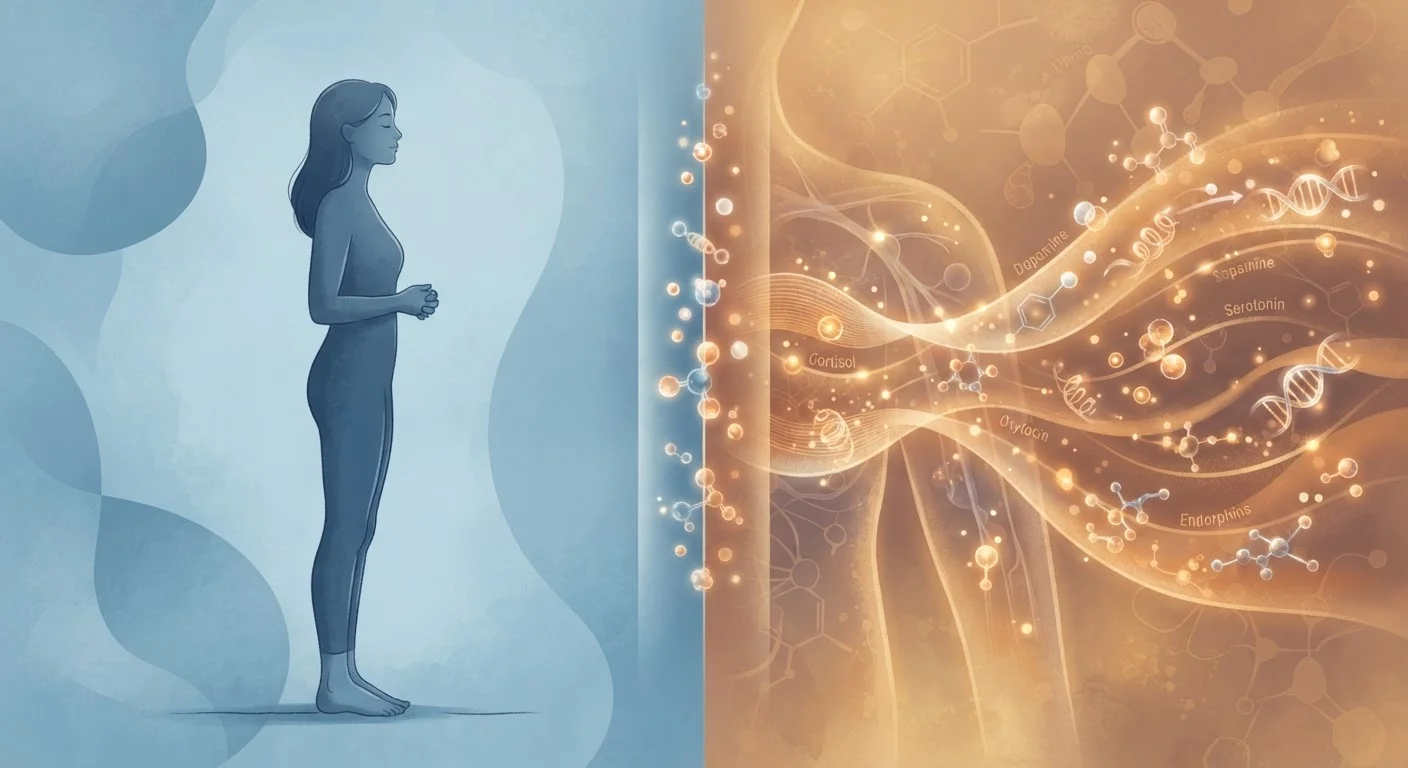
When something frightens or overwhelms you — a near-miss on the highway, a high-stakes deadline — your body doesn't pause to think. It reacts, flooding your bloodstream with a rapid cocktail of hormones designed to help you survive. Understanding what those hormones are and what they actually do is one of the most useful things you can learn about your own wellbeing.
| Primary stress hormone | Cortisol |
| Speed of adrenaline response | Within seconds of perceived threat (Endocrine Society) |
| Cortisol's natural daily peak | Approximately 30–45 minutes after waking (Published circadian biology research) |
| Organs producing stress hormones | Adrenal glands (above each kidney) |
| Hormone that signals cortisol release | ACTH (adrenocorticotropic hormone), from the pituitary |
| Chronic stress impact on cortisol | Can flatten natural daily rhythm over time (Psychoneuroendocrinology research literature) |
The two most recognized players are cortisol and adrenaline (epinephrine), but they work very differently. Adrenaline is the body's emergency signal — a fast surge that sharpens your senses and mobilizes energy in seconds. Cortisol is slower and more sustained, helping to maintain that heightened state and then eventually restore balance. For a deeper look at how the brain orchestrates this cascade, see The Science Behind Why Stress Feels Overwhelming.
Cortisol
A steroid hormone produced by the adrenal glands that regulates metabolism, immune response, and the body's reaction to stress. It follows a natural daily rhythm, peaking in the morning and tapering by evening.
Adrenaline (Epinephrine)
A fast-acting hormone released by the adrenal medulla in response to immediate threat. It rapidly increases heart rate, redirects blood to muscles, and sharpens alertness within seconds.
HPA Axis
The hypothalamic-pituitary-adrenal axis — a three-part communication chain between the brain and adrenal glands that governs cortisol release during stress.
Fight-or-Flight Response
An automatic physiological state triggered by perceived danger, preparing the body to confront or escape a threat through hormonal and nervous system changes.
Norepinephrine
A hormone and neurotransmitter released alongside adrenaline during stress. It narrows blood vessels, raises blood pressure, and heightens focus and arousal.
Allostatic Load
The cumulative physiological wear and tear on the body from repeated or chronic stress. High allostatic load is associated with increased risk of several health problems over time.
How the Hormonal Cascade Actually Works
When your brain detects a threat — real or perceived — the amygdala sounds the alarm. The HPA axis kicks into gear: the hypothalamus signals the pituitary gland, which releases ACTH, which prompts the adrenal glands to secrete cortisol. Simultaneously, a separate pathway triggers the adrenal medulla to dump adrenaline and norepinephrine into circulation almost instantly.
Here's what that looks like in your body within moments of a stressor:
- Heart rate and blood pressure climb to push more blood to muscles.
- Breathing quickens to increase oxygen intake.
- Digestion and immune activity temporarily slow — resources are redirected.
- Blood sugar rises to fuel muscles and the brain.
- Pain perception dulls and focus sharpens.
This is elegant, life-saving biology. The trouble arises when the system never gets the all-clear signal. To understand why modern life keeps this loop running, see Acute Stress vs. Chronic Stress: Why the Difference Matters.
When Helpful Becomes Harmful: Chronic Elevation
This Is General Health Information
The information in this article explains how stress hormones function at a general biological level. It is not a substitute for medical advice. If you are experiencing symptoms you believe may be related to a hormonal or stress-related condition, please speak with a qualified healthcare professional.
A single cortisol spike is normal and generally harmless. The concern with chronic stress is that cortisol levels never fully return to baseline, gradually disrupting the body's finely tuned rhythms. Research in psychoneuroendocrinology links persistently elevated cortisol to sleep disruption, changes in appetite regulation, mood instability, and diminished immune function — though individual responses vary considerably.
Allostatic load is the term researchers use for the accumulated biological cost of repeated stress activation. Think of it as the wear and tear left behind after the hormonal storm passes — and passes again, and again. Why Stress Never Fully Switches Off explores why recovery matters as much as the stress response itself.
Cortisol also has a documented relationship with immune function. Prolonged elevation can suppress certain immune responses that your body depends on daily. For the specifics of that connection, Chronic Stress and the Immune System breaks it down clearly.
77%
Americans reporting physical symptoms of stress
According to the American Psychological Association's Stress in America survey.
2–3×
Higher cortisol levels in chronically stressed adults vs. low-stress peers
Estimates from research reviewed in psychoneuroendocrinology literature; individual variation is significant.
~20 min
Time for cortisol to peak after a stressor
Based on controlled laboratory stress studies tracking hormonal response timing.
Practical Ways to Support Your Stress Hormone Balance
You can't eliminate cortisol or adrenaline — nor would you want to. But behavioral science offers several well-studied strategies that help the stress response resolve more efficiently, rather than linger:
- Diaphragmatic breathing: Slow, deep breaths activate the parasympathetic nervous system, signaling safety and helping cortisol begin to fall. Even five minutes can make a measurable difference in perceived stress.
- Consistent sleep timing: Cortisol follows your circadian rhythm. Irregular sleep disrupts that rhythm. Anchoring your wake time each day helps normalize the natural cortisol morning peak.
- Moderate physical movement: Exercise temporarily raises cortisol but trains the system to return to baseline more quickly over time — an effect well documented in exercise physiology research.
- Social connection: Human social bonding is associated with lower cortisol reactivity. Even brief, warm social interactions may buffer the stress response.
- Reducing perceived unpredictability: Much of what makes stress feel overwhelming is uncertainty, not just workload. Building small predictable routines can reduce how often the alarm system triggers in the first place.
None of these strategies require expensive programs or equipment — and none are substitutes for professional care when stress is significantly affecting your health or daily functioning. If you're unsure whether what you're experiencing goes beyond everyday stress, a healthcare provider is the right starting point.
This article is for general informational and educational purposes only and does not constitute medical advice. Please consult a qualified healthcare professional for guidance specific to your health situation.