

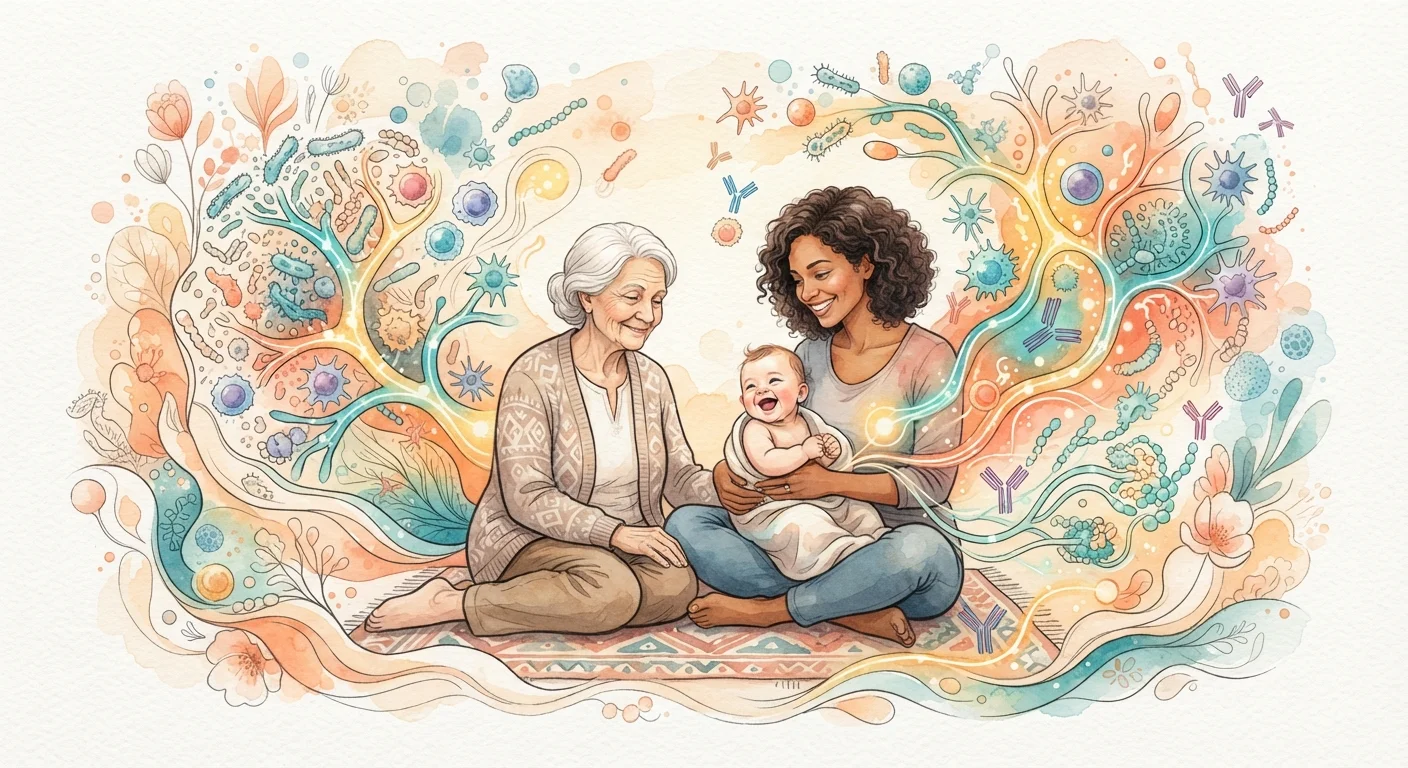
Why the Gut-Immune Relationship Isn't Static
Most people think of the immune system as something fixed — either strong or weak. In reality, it's a continuously adapting network, and the gut microbiome is one of its most influential training grounds. As the gut-immune axis describes, roughly 70% of immune tissue resides in or near the gastrointestinal tract, making the gut a central hub for immune signaling and regulation.
What changes across a lifetime is how that relationship operates. The microbial communities populating your gut shift in composition and function from birth through old age, and the immune system responds — and adapts — accordingly. Understanding these shifts is useful context for anyone thinking about long-term health. For a broader foundation, see our complete overview of gut health.
Infancy: Building the Foundation
The gut of a newborn is largely sterile at birth. Within days, microbial colonization begins — shaped profoundly by delivery method, feeding practices, and environmental exposure. Vaginally born infants acquire different early microbial communities than those born via cesarean section, and breastfed infants receive beneficial bacteria alongside immune-active compounds in breast milk, such as human milk oligosaccharides (HMOs), which selectively nourish early gut microbes.
This early colonization isn't incidental — it's foundational. The infant immune system is still learning to distinguish between harmless substances and genuine threats. Gut microbes play a direct role in this education, helping calibrate regulatory immune responses. Disruptions to this early microbial environment — through antibiotic exposure, formula use, or other factors — are an active area of research regarding long-term immune development.
Note: Decisions about infant feeding and antibiotic use involve complex individual factors. Always consult a pediatric healthcare provider for guidance specific to your child.
Gut microbiome
The vast community of microorganisms — bacteria, fungi, viruses, and others — living in the gastrointestinal tract. These microbes influence digestion, immune function, and even mood.
Gut-immune axis
The bidirectional communication system between the gut microbiome and the immune system. Changes in one directly influence the other.
Immunosenescence
The gradual decline in immune system function that occurs with aging, leading to reduced ability to fight infections and respond to vaccines.
Inflammaging
A term describing the low-grade, chronic inflammatory state that tends to increase with age. It is associated with a range of age-related health conditions.
Short-chain fatty acids (SCFAs)
Compounds produced when gut bacteria ferment dietary fiber. SCFAs such as butyrate play a key role in maintaining gut barrier integrity and regulating immune responses.
Human milk oligosaccharides (HMOs)
Complex carbohydrates found in breast milk that are not digested by infants but instead selectively feed beneficial gut bacteria, supporting early immune development.
Adulthood: Peak Diversity, Real Pressures
By early adulthood, the gut microbiome typically reaches its most diverse and stable state. A more diverse microbiome is generally associated — in the research literature — with more resilient immune regulation. The gut lining maintains tight junctions that prevent unwanted microbial byproducts from entering circulation, and a well-populated microbiome supports the production of short-chain fatty acids (SCFAs) that modulate inflammation.
But adulthood brings sustained pressures: chronic stress, disrupted sleep, processed food diets, and antibiotic courses can all erode microbial diversity. These habits don't just affect digestion — they ripple into immune function. Our article on daily habits that shape the gut-immune relationship covers the lifestyle levers that matter most during these years. Nutritional adequacy also plays a role; key micronutrient needs evolve even before older age sets in.
~100 trillion
Microbial cells in the human gut
According to estimates widely cited in microbiome research literature, the gut harbors roughly as many microbial cells as there are human cells in the body.
30%+
Decline in microbiome diversity linked to aging
Research published in journals including Cell Host & Microbe suggests significant reductions in microbial diversity are common from midlife onward.
First 3 years
Critical window for microbiome establishment
Scientific consensus holds that the first three years of life are particularly influential in shaping long-term microbial community composition and immune calibration.
Older Adulthood: Immunosenescence and the Microbiome
Aging brings two intersecting changes: immunosenescence — the gradual decline in immune system efficiency — and shifts in the gut microbiome toward lower diversity and reduced populations of beneficial bacteria. These changes are interrelated. Reduced microbiome diversity may contribute to low-grade chronic inflammation, sometimes called inflammaging, which underlies many age-related health concerns.
Diet quality, physical activity, medication burden, and social engagement all influence how the gut-immune axis ages. There is no single trajectory — some older adults maintain robust microbial diversity well into their 70s and beyond, often associated with diverse, fiber-rich diets and sustained activity levels. For context on the immune side of this picture, see our reference on how immune needs shift with age. Building and maintaining immune resilience over time is explored in depth in our evidence-based guide to immune resilience.
Routine health checkups matter at every stage. Understanding which screenings and checkups apply at your age is a practical complement to gut-immune awareness.
This article is for general informational and educational purposes only and is not a substitute for professional medical advice. Consult a qualified healthcare provider for guidance specific to your health situation.