

Key Takeaways
- Chronic stress exposes the brain to prolonged cortisol elevation, which can shrink key memory-related regions.
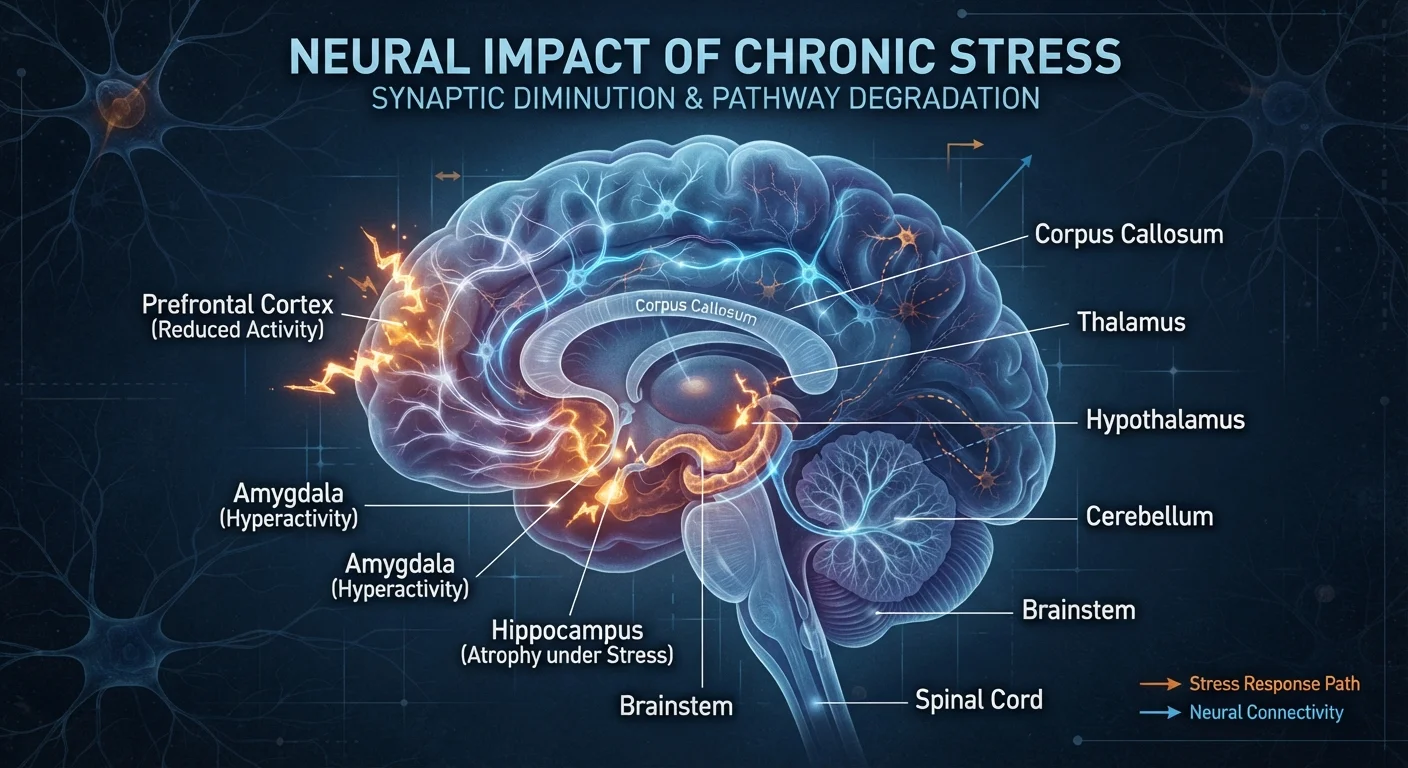
- The hippocampus, prefrontal cortex, and amygdala are particularly vulnerable to long-term stress effects.
- These changes are associated with memory difficulties, impaired decision-making, and heightened anxiety.
- Evidence suggests some of these changes may be partially reversible with consistent stress management.
- Practices such as aerobic exercise, mindfulness, and adequate sleep have research support for protecting brain health.
- Always consult a qualified healthcare professional for concerns about cognition or mental health.
Chronic Stress and the Brain
Chronic stress refers to prolonged, persistent activation of the body's stress response — lasting weeks, months, or years rather than resolving after a short-term threat. Unlike acute stress, which can sharpen focus temporarily, chronic stress exposes the brain to sustained levels of stress hormones, particularly cortisol, that can alter its structure and function over time. Research shows these changes can affect memory, emotional regulation, and decision-making ability.
Elevated glucocorticoid exposure — especially cortisol — has been associated with dendritic atrophy in the prefrontal cortex and hippocampus, and with hypertrophy of the amygdala, as documented in both animal models and human neuroimaging studies.
How Stress Hormones Act on Brain Tissue
When you encounter a threat — real or perceived — your brain triggers the release of cortisol and adrenaline through the hypothalamic-pituitary-adrenal (HPA) axis. In short bursts, this response sharpens alertness and marshals energy. The problem arises when the stress signal never fully switches off. To understand why the brain is so sensitive to this, it helps to know that cortisol receptors are especially concentrated in three regions: the hippocampus, the prefrontal cortex, and the amygdala. Learn more about how your brain and body respond to stress at the biological level.
Prolonged cortisol exposure interferes with neuronal communication, suppresses the production of new brain cells (neurogenesis), and can cause the branching structures of neurons — called dendrites — to shrink. These are not abstract risks; they translate into real, observable changes in cognition and mood.
~10–20%
Hippocampal volume reduction in chronic stress
Studies of individuals with stress-related disorders have documented meaningful reductions in hippocampal volume compared to non-stressed controls, with variation by duration and severity.
3x
Higher dementia risk linked to midlife chronic stress
Some longitudinal studies have found that people reporting high chronic stress in midlife face substantially elevated risk of cognitive decline in later decades, though causation is complex.
8 weeks
Duration for measurable MBSR brain changes
A widely cited study found that an 8-week mindfulness-based stress reduction program produced detectable changes in amygdala gray-matter density in participants.
The Three Brain Regions Most Affected
Hippocampus: The Memory Hub
The hippocampus is central to forming new memories and consolidating information for long-term storage. Neuroimaging research has found that people who experience prolonged stress or stress-related disorders such as PTSD tend to show reduced hippocampal volume. This is associated with difficulties remembering recent events, learning new material, and orienting in space.
Prefrontal Cortex: The Decision-Making Center
The prefrontal cortex governs executive functions — planning, impulse control, and rational decision-making. Chronic stress weakens the neural connections in this region, which is one reason people under sustained pressure often report difficulty concentrating, poor judgment, and increased impulsivity. Chronic stress essentially tilts the brain away from thoughtful reasoning and toward reactive, survival-oriented behavior.
Amygdala: The Threat Detector
While stress tends to shrink the hippocampus and prefrontal cortex, it can enlarge and heighten the reactivity of the amygdala — the brain's alarm system. A hyperactive amygdala contributes to persistent anxiety, exaggerated fear responses, and difficulty distinguishing real threats from minor inconveniences.
Evidence-Based Approaches to Protect Brain Health
The good news from research is that the brain retains a degree of plasticity — the ability to adapt and recover — throughout life. Several well-studied habits show meaningful support for maintaining cognitive resilience under stress.
- Aerobic exercise: Regular moderate-intensity physical activity has been shown in multiple studies to promote hippocampal neurogenesis and reduce cortisol reactivity. Even consistent walking has measurable effects on brain volume and memory performance.
- Mindfulness-based stress reduction (MBSR): Structured mindfulness practices have demonstrated reductions in amygdala reactivity and improvements in prefrontal cortex connectivity in clinical trials.
- Sleep: The brain clears metabolic waste and consolidates memory during sleep. Chronic stress disrupts sleep architecture, compounding cognitive harm — making sleep protection a high priority.
- Social connection: Strong social ties are associated with lower cortisol levels and reduced dementia risk in longitudinal studies.
Chronic stress also accelerates biological aging at the cellular level. Explore how prolonged stress affects telomere length and cellular aging for a deeper look at the body-wide effects. And because stress also reshapes immune function, understanding the cortisol-immune connection adds another dimension to why managing it matters.
Start With One Manageable Habit
You do not need to overhaul your lifestyle to begin supporting brain health. Research on stress and cognition consistently shows that even modest, consistent changes — like a 20-minute daily walk or a brief breathing practice — can meaningfully influence cortisol patterns over time. Pick one habit, establish it for a few weeks, then build from there. Sustainable change compounds.
This article is for general informational and educational purposes only and does not constitute medical advice. If you have concerns about your memory, mental health, or cognitive function, please consult a qualified healthcare professional.